Haeundae Beach in Busan, South Korea is amazing and so is the market that runs parallel to it one block from the sand. It's a narrow alley spanning the width of a city block with everything you could need from restaurants to dumpling stands to clothing stores to disgusting entertainment. One of the things that they are known for there is their eel. This guys skins eels alive for maximum freshness and I'm guessing it's also to attract customers. Take a look:
Showing posts with label Markets. Show all posts
Tuesday, July 22, 2014
Haeundae Beach Market - Busan
Haeundae Beach in Busan, South Korea is amazing and so is the market that runs parallel to it one block from the sand. It's a narrow alley spanning the width of a city block with everything you could need from restaurants to dumpling stands to clothing stores to disgusting entertainment. One of the things that they are known for there is their eel. This guys skins eels alive for maximum freshness and I'm guessing it's also to attract customers. Take a look:
Labels:
beaches,
Busan,
food and drink,
Korea,
Markets
Friday, May 30, 2014
Jalgachi Market - Busan
A couple of weeks ago was Buddha's Birthday. We had a four day weekend and decided to take this golden opportunity to take a trail to Busan, Korea. Alex and I tried getting KTX high speed train tickets a month in advance, but since it was such a busy travel weekend, the tickets were already sold out. So we ended up on the "slow" train, where we traveled just about the length of the country in 5 hours.
When we arrived, we hit the ground running before even going to our hostel. Our first stop was the Busan tower to get a lay of the land. We then headed to the famous Jagalchi Fish Market. We were told it is one of the largest fish markets in Asia. We figured this was as good a place as any to try Sannakji or live octopus. Check out the video.
![]() |
| The massive building at the bottom is Jagalchi Fish Market |
![]() |
| Hunting it down |
![]() |
| Gwangan Bridge |
![]() |
| Gwangan Bridge |
![]() |
| This is a thing |
![]() |
| Please don't eat me. |
![]() |
| She just caught a live fish to show a customer and ask if it will do. Kind of like a bottle of wine at a nice restaurant. |
Tuesday, July 30, 2013
La Paz, Bolivia
From Puno, we hired a cab to take us to the Bolivian border. The trip was less than two hours to the small border town of Desaguadero. We walked over a small bridge lined with people selling goods and we were there!
The three of us gringos walked across and stood there for a second looking where to go. It wasn't clear exactly where the immigration office was so after discussing our options for a second, we decided to keep walking. I'll admit, part of this decision was fueled by the fact that americans have to pay $135 to enter Bolivia, however, it's not like we hid in a truck bed under barrels of hay. We were 3 gringos with massive 70-80 liter backpacks standing and looking around at a slow border. We stood out, and it was not clear where to go. So, we kept walking and hopped on the first combi we saw that was heading to La Paz.
A few hours later, and we had arrived in the middle of a downpour. We ducked into the first restaurant we saw for cover, a bite, and a beer.
It took us a few tries to find a hostel that was okay with the fact that we were never stamped at the border (and hence, not legally in the country), but we found a decent one, dropped off our things and got ready to explore. We headed out on the city of peace to see what it had to offer.
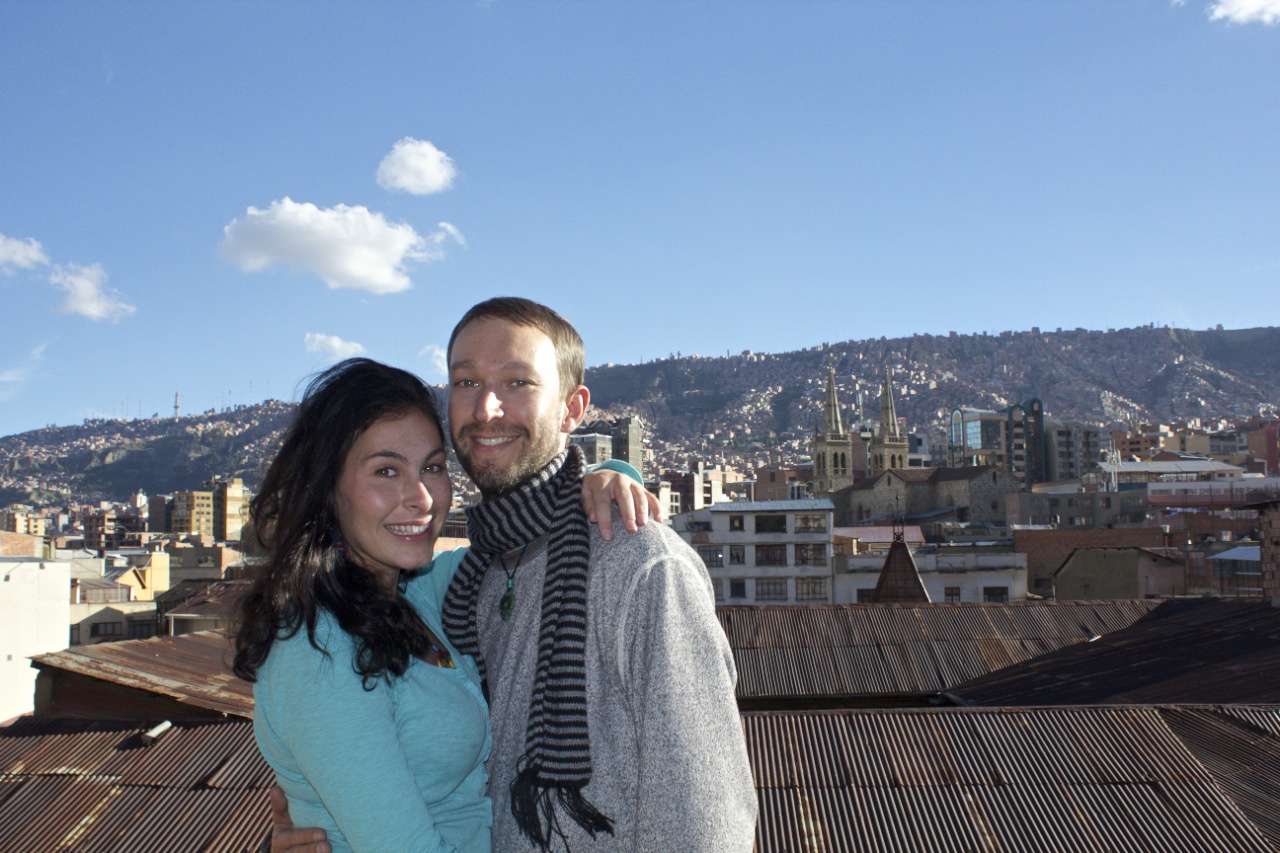
La Paz is the world's highest capital city at 3,650 m (11,975 ft). That's more than twice as high as Denver! So La Paz is cold. It's also the cheapest country in South America to buy alpaca wool, crafts and clothes. So naturally, we headed towards El Mercado de Las Brujas (The Witches Market). This place turned out to the shinning highlight of La Paz.
The Witches Market was filled with alpaca sweaters, scarfs, hats, gloves, at a cost even lower than in Peru (which is also known as being a cheap country for shopping). We went a little nuts with gifts for our friends and family but realized we didn't spend THAT much. An Alpaca sweater could cost as little as $8, and hats and scarfs cost around $3. There were also tons of tempting and cheap hammocks, musical instruments, beautifully pattered guitar straps, handmade earrings, and of course the dried out almost shrunken heads of animals. Wait, what? Yeah. (sorry no pictures of this, I didn't want to upset the witches).
This is the cheapest and most interesting place to shop the country known for cheap and interesting things to buy. If you can only do one thing in La Paz, go to El Mercado de Las Brujas with $50.
The three of us gringos walked across and stood there for a second looking where to go. It wasn't clear exactly where the immigration office was so after discussing our options for a second, we decided to keep walking. I'll admit, part of this decision was fueled by the fact that americans have to pay $135 to enter Bolivia, however, it's not like we hid in a truck bed under barrels of hay. We were 3 gringos with massive 70-80 liter backpacks standing and looking around at a slow border. We stood out, and it was not clear where to go. So, we kept walking and hopped on the first combi we saw that was heading to La Paz.
A few hours later, and we had arrived in the middle of a downpour. We ducked into the first restaurant we saw for cover, a bite, and a beer.
![]() |
| A travel tired Alex sporting her first Paceña (from La Paz) |
La Paz is the world's highest capital city at 3,650 m (11,975 ft). That's more than twice as high as Denver! So La Paz is cold. It's also the cheapest country in South America to buy alpaca wool, crafts and clothes. So naturally, we headed towards El Mercado de Las Brujas (The Witches Market). This place turned out to the shinning highlight of La Paz.
The Witches Market was filled with alpaca sweaters, scarfs, hats, gloves, at a cost even lower than in Peru (which is also known as being a cheap country for shopping). We went a little nuts with gifts for our friends and family but realized we didn't spend THAT much. An Alpaca sweater could cost as little as $8, and hats and scarfs cost around $3. There were also tons of tempting and cheap hammocks, musical instruments, beautifully pattered guitar straps, handmade earrings, and of course the dried out almost shrunken heads of animals. Wait, what? Yeah. (sorry no pictures of this, I didn't want to upset the witches).
This is the cheapest and most interesting place to shop the country known for cheap and interesting things to buy. If you can only do one thing in La Paz, go to El Mercado de Las Brujas with $50.
![]() |
| Mercado de Las Brujas |
![]() |
| View from the outdoor back patio of our hostel |
Tuesday, March 26, 2013
Caldo De Cabeza (Sheep Head Soup)
My roomate Jacob had one request on his birthday: to eat Caldo De Cabeza (Sheep Head Soup) in San Camilo Market. My other roommates Thijs, Menina and I all contemplated this idea and decided to honor the request. We headed to San Camilo knowing that it would be a risky choice of venue for such an order but also knowing no other place would do. We went up the stairs to the second floor of the market which is a mere fraction of the size of the first floor and where you can find many traditional, cheap and "colorful" places to pull up a stool.
Mind you, as I mentioned in my previous post about San Camilo, it is not recommended by locals to eat here as it is not as clean or fresh. Nevertheless, this would be my 4th roll of the dice with lunch at San Camilo and I was a confident 3 for 3 without issue. The last time I ate there, I went with Jacob and we drank juice made with tap water as the locals laughed at us and mocked "rico" meaning delicious as they drank from their bottles of soda.

We sat at what looked like a popular spot at the entrance of the food court where locals seemed to be enjoying their dishes. The place was called Anita, which I can only assume is the name of one of the two women who were preparing the food, washing the dishes, and serving the customers. All of the operations here at San Camilo were run something like this with only a couple of tables to serve between 4 and 8 people at a time. We ordered our Caldo de Cabeza and hoped for the best.
When it came, it looked delicious and well prepared and smelled like many of the other soups we've eaten. The word caldo actually means broth or soup and this broth was quite delicious. There were plenty of potatoes and corn in there as well. I honestly enjoyed it and ate all of it except for some unidentifiable chunk of flesh and bone. Jacob's soup had the jaw of the sheep and it looked pretty freaky. I guess it was only fair that the birthday boy had the obviously identifiable piece of face to fulfill his birthday wishes. The dish was 8 soles ($3) each and I think I'd recommend the experience if you ever get the chance to order it.
Labels:
Arequipa,
food and drink,
Markets,
Peru
Thursday, March 21, 2013
Arequipa - Mercado San Camilo
![]() |
| So much fruit! So cheap and so good. |
The market has some of the best prices for fresh fruits, vegetables, cheeses, etc. There are also plenty of stands that sell various meats and fish but all of the locals I have spoken with would rather not buy these items at San Camilo. If you do, I suggest you get there early in the morning as there is no refrigeration so everything sits out all day. However, our 2nd day in Arequipa, Alex and I got Ceviche in San Camilo in the afternoon and it was delicious! It only cost us 5 soles ($2) and was enough for both of us. Later, our Arequipeñan friends told us we were crazy and daring to get Ceviche there. It may not be the best idea to get Ceviche there, but if you are ever in Arequipa, I highly suggest grabbing some cheese and fruit at San Camilo.
![]() |
| Our vegetable lady (casera). A heavy bag of all the vegetables you could want costs about 12 soles ($5). |
![]() |
| La triste mujera de pescado |
![]() |
| Mi Casero de papas. This guy will dig deep in his sack and give you the biggest potatoes you've ever seen. They are the size of mangos. Verdad. |
![]() |
| Alex and I ate Ceviche at one of these food kiosks |
![]() |
| All the chicken heads, be quiet! Single ladies, make noise! |
![]() |
| Mi Casera de queso |
![]() |
| Best. Palta. Around. |
![]() |
| This is the spot for hojas de coca (coca leaves). See my post on coca leaves for more info. |
Labels:
Arequipa,
color pop,
food and drink,
Markets,
Peru
Saturday, October 13, 2012
Subscribe to:
Posts (Atom)